










The cloud computing market is expected to reach $2,291.59 billion by 2032, according to a Fortune Business Insight report. AWS, Azure, and Google Cloud are the three big players in this market, holding 66 percent of the total market share. These cloud giants will likely be your top choices when hosting a website or application.
- AWS offers a massive ecosystem with many solutions, including computing, storage, networking, database analytics, machine learning, and artificial intelligence.
- Azure seamlessly integrates with Microsoft products and focuses on enterprise solutions.
- Google Cloud is known for data analytics and machine learning (ML) capabilities.
Understanding the unique strengths of each will help you choose the correct cloud platform for you. In this article, we’ll compare AWS, Azure, and GCP for their services, features, ease of use, AI/ML applications, hybrid cloud capabilities, and security and compliance.
- AWS vs. Azure vs. Google Cloud Comparison
- What is Amazon Web Services (AWS)?
- What is Microsoft Azure?
- What is Google Cloud Platform (GCP)?
- Which cloud provider is best for you and your organization?
- Best for core features: AWS
- Best for Hybrid Cloud Capabilities: Azure
- Best for AI and ML applications: Google Cloud Platform
- Bottom line: the choice is up to you
- Frequently Asked Questions (FAQs)
AWS vs. Azure vs. Google Cloud Comparison
The following table shows the comparison of AWS, Azure, and Google Cloud platforms based on the services they offer to their clients:
| AWS | Microsoft Azure | Google Cloud | |
|---|---|---|---|
| Market share as of Q3 2025 (Source: Synergy Research Group) | 29 percent | 20 percent | 13 percent |
| Compute | EC2, Lambda, Lightsail, Batch, APP Runner, ECS | Virtual Machines, Azure Functions, App Services, Kubernetes Service, Container Apps, Batch, LVM | Compute Engine, Cloud Functions, App Engine, VMware Engine, Cloud Run, Recommender, Google Kubernetes Engine |
| Storage | S3, EBS, EFS, Backup, Glacier, Elastic Data Recovery | Data Lake Storage, Disk Storage, File Storage, Container Storage, Blob Storage, Azure NetApp Files | Cloud Storage, Persistent Disk, Filestore, Storage Transfer Service, Transfer Appliance, Nearline |
| Databases | RDS, SimpleDB, DynamoDB, DocumentDB, Aurora, RDS, Redshift | Azure Arc, Azure Stack, Azure SQL, Cosmos DB, Cache for Redis, Database Migration Service, Azure Database for MySQL, Azure Database for PostgreSQL | Cloud SQL, Firestore, Bigtable, Memorystore, Spanner, Datastream, AlloyDB |
| Machine learning (ML) | AmazonQ, SageMaker, Augmented AI, Bedrock, Amazon Q, CodeGuru, Comprehend, Forecast | Azure ML, Cognitive Search, OpenAI Service, AI Speech, AI Vision, AI Content Safety, DevOps | Gemini, Looker, Vertex AI Platform, AutoML, Dialogflow, Natural Language, Vision AI, Video AI |
| Security & identity | IAM, Shield, Cognito, Detective, Inspector, GuardDuty | Application Gateway, Microsoft Sentinel, Key Vault, Azure Firewall, Web Application Firewall, Azure DDoS Protection | IAM, Cloud IDS, Cloud Armor, Identity Platform, Cloud Key Management, Cloud Data Loss Prevention, Identity-Aware Proxy |
| Pay-as-you-go pricing | ✔ | ✔ | ✔ |
| Visit AWS | Visit Microsoft Azure | Visit Google Cloud |
If the above criteria are insufficient to help you make an informed choice, you can check out their websites for more product and service criteria. Keep reading for more information about each provider.
What is Amazon Web Services (AWS)?
AWS currently holds the market leader position with a 29 percent share as of Q3 2025, according to the Synergy Research Group, making it a highly sought-after cloud computing solution. It provides fully featured on-demand cloud services for individuals, start-ups, enterprises, and government agencies, offering computing power, storage options, and networking capabilities.
- Market Share: 29 percent market share worldwide.
- Launch Year: 2006
- Region: As of 2025, AWS Cloud covers 38 geographic regions, 120 Availability zones, and 13 Regional Edge Caches worldwide. AWS also plans for three more regions and 10 more availability zones.
AWS key differentiators
Some of AWS’s more distinct features include compute cloud, distributed ledgers, serverless services, the Internet of Things (IoT), AI, Containers, and more.
- Elastic Compute Cloud (EC2): EC2 is a comprehensive computing platform that enables users to run virtual machines (VMs) and scale computing power while supporting Intel, AMD, Arm processors, and GPU-powered servers for intensive computing.
- Blockchain on AWS: AWS provides users with the tools to build unique blockchain networks and access a vast ecosystem of 70+ validated blockchain solutions from its partners.
- Serverless computing: AWS serverless technologies for code execution, application integration, and data management include automatic scalability and built-in high availability.
- IoT services: AWS IoT Core and other IoT services connect billions of devices while collecting, storing, and analyzing IoT data for industrial, consumer, automotive, and commercial applications.
- Strong ecosystem: AWS includes an extensive ecosystem of third-party integrations and a strong community, which provides considerable support and resources.

AWS pricing
With more than 200 cloud services, AWS offers pay-as-you-go pricing based on the services used, but specific pricing information beyond AWS’s pricing calculator isn’t provided. AWS offers flexible pricing for various computing instances and storage based on stored and accessed data. Capacity and usage trends determine storage costs for Amazon S3 and Amazon EBS. Discounts are available through reserved instances and AWS saving plans with upfront payments. For more details, please check Amazon Pricing.
AWS pros and cons
| Pros | Cons |
|---|---|
| • Wide range of services available for multiple use cases and industries • Vast global reach • Low latency • Complies with regional data regulations • Offers 12-month free tier on more than 40 services | • Can be overwhelming and may require dedicated expertise • Pricing can be complicated • Broad service offering can water down more specialized services |
What is Microsoft Azure?
Azure is Microsoft’s cloud computing service that empowers businesses to develop, test, deploy, and manage their applications and services. Azure provides various services, including computing, data and analytics, hybrid cloud, security and governance, and cloud migration.
- Market Share: 20 percent global market share (sourced from a market share report).
- Launch Year: 2010
- Region: Microsoft Azure operates in more than 70 regions globally, 113 availability zones, and 192 edge locations.
Azure key differentiators
Azure’s offerings include on-premises, multi-cloud, and edge solutions, cloud migration tools and services, vast artificial intelligence (AI) solutions, blockchain services, and cloud security services. Azure functions allow you to run event-driven functions without the burden of infrastructure management.
- Strong focus on hybrid cloud: Azure provides an extensive array of tools for hybrid cloud environments to simplify the integration of on-premises data centers with the cloud.
- Freedom to build and support any application: Azure is not just for Windows-based services. It also supports open-source technologies and platforms, allowing everyone to create and maintain any application.
- Migration and modernization: Users have tools, resources, and guidance to ease and accelerate their cloud migration and modernization.
- Azure AI: Azure offers AI services for data scientists and developers, cutting across vision, language, speech, and decision-making models.
- Web3 services: With Azure, organizations can implement blockchain as a service to build, deploy, and scale decentralized applications.
- Security and governance: Services such as Azure governance, backup and disaster recovery, network security, and confidential computing ensure cloud security.
Azure pricing
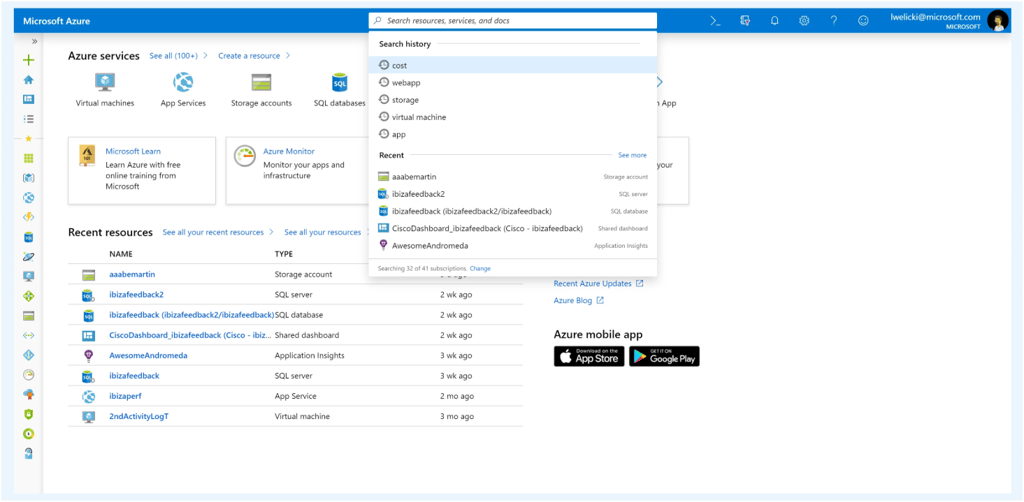
Like AWS, Azure offers many distinct products and uses a pay-as-you-go model.
Azure pros and cons
| Pros | Cons |
|---|---|
| • Seamless integration with Microsoft products• Vast global reach • Emphasis on hybrid cloud allows for flexible data management • Powerful AI and blockchain tools included | • Higher learning curve than other platforms • May not be suitable for smaller businesses; enterprise-heavy • Pricing structure is a bit complex |
What is Google Cloud Platform (GCP)?
Google Cloud Platform (GCP) is a collection of Google’s cloud computing services that deliver products across AI and ML, compute, storage, databases, data analytics, developer tools, and networking. The platform provides customizable virtual machine instances with both predefined and custom options. This means that you can select the exact specifications that you need for your project.
- Market Share: 13 percent market share worldwide.
- Launch Year: 2008
- Region: GCP comprises 42 cloud regions, 127 zones, and is available in 200+ countries.
Google Cloud key differentiators
GCP customers benefit from several capabilities, including hybrid and multi-cloud deployments, big data analytics, AI-powered code and applications, customizable VMs, and scalable and serverless databases.
- Open source and multi-cloud: Google Cloud Platform is designed with an open architecture that supports multi-cloud and hybrid cloud deployments.
- Data analytics strength: GCP excels in big data analytics and offers dozens of tools like BigQuery for high-speed SQL queries and Looker for business intelligence.
- AI and ML emphasis: Customers can build generative AI applications and conversational AI products, generate AI-powered code, and more with Google’s strong focus on AI and ML.
- Compute Engine: Google Cloud’s Compute Engine enables customers to build and run customizable VMs, automatically deploy containers, and migrate applications.
- Fully managed databases: GCP uses fully managed PostgreSQL, MySQL, and SQL Server databases to lower its clients’ maintenance costs and help them develop rich applications.
GCP pricing
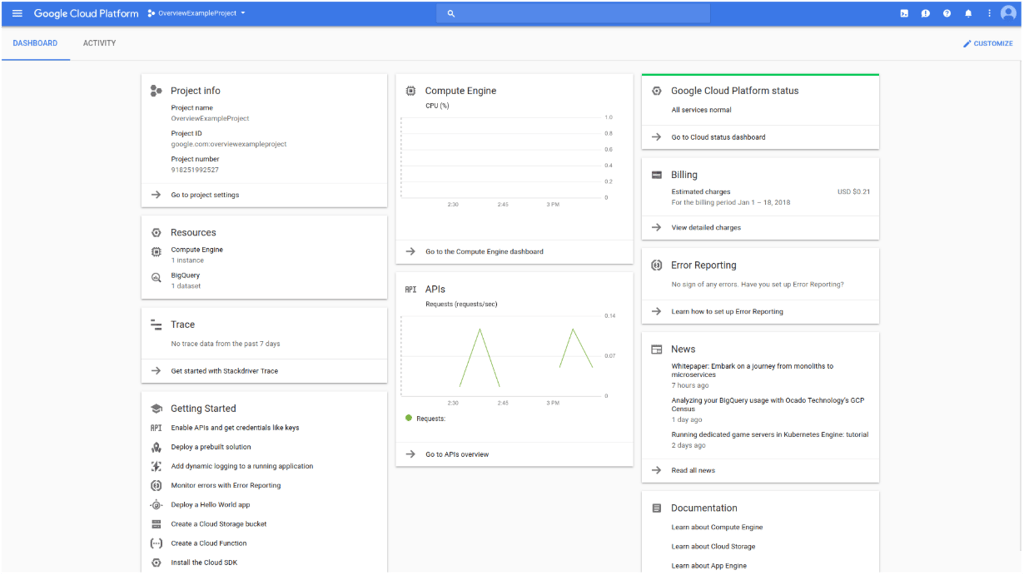
GCP pricing is flexible, following a pay-as-you-go model. Google encourages prospective users to contact them for a quote. One advantage they offer over competitors is that new customers receive $300 in free credits to run, test, and deploy their workloads.
GCP pros and cons
| Pros | Cons |
|---|---|
| • Open architecture is suitable for multi-cloud, hybrid cloud deployments • Emphasizes AI and ML with its advanced capabilities • Strong in Kubernettes • Excels at conducting cutting-edge research | • Fewer 3rd party integrations than the likes of AWS • Smaller community support • Focus on data analytics may overshadow its other offerings |
Which cloud provider is best for you and your organization?
As the three leading cloud platforms, AWS, Azure, and Google Cloud each excel in different areas, so the best choice depends on your organization’s priorities. Below are the top use cases where each provider stands out.
Best for core features: AWS
AWS has the most comprehensive service catalog, with more than 250 offerings. It distinguishes itself not only by the number of services it provides but also by their quality. AWS offers solutions in almost every cloud niche, from foundational services like EC2 for computing and S3 for storage to more specialized offerings in analytics, IoT, machine learning, serverless, and supply chain.
With these services, AWS has a global network with many data centers spread across multiple regions and availability zones, ensuring high availability, fault tolerance, and scalability for any application. Business leaders’ widespread use of AWS across multiple sectors proves its ability to meet many cloud computing requirements.
Best for Hybrid Cloud Capabilities: Azure
Azure’s hybrid cloud capabilities offer seamless integration with existing Microsoft environments like Windows Server, Active Directory, and SQL Server and provide a cohesive experience, especially for businesses deeply entrenched in Microsoft’s ecosystem.
With Azure Stack, you can use Azure’s cloud services in on-premises environments, making the hybrid cloud experience truly consistent. Because of this, businesses can build and launch apps in the same way, whether in the cloud or on-premises. This makes it very flexible and gives you smooth control over where workloads reside.
Best for AI and ML applications: Google Cloud Platform
Google Cloud stands out when it comes to AI and ML apps. Its Vertex AI platform is especially good for making ML models because it is clean, easy to use, and uses a containerized approach.
Vertex AI works with many of Google’s AI and machine learning tools (i.e., TensorFlow) and many AI APIs for speech, language, images, and structured data. It’s a complete solution for developers and data scientists who want to use the newest AI technology.
Google’s emphasis on AI applications is demonstrated by the platform’s focus on open-source technologies and its key role in creating Kubernetes for orchestration.
Bottom line: the choice is up to you
When choosing the best cloud provider, consider which platform offers the features you want at a price you can afford. This way, your teams won’t have to work too hard as your cloud needs grow. When using the price calculator on each platform, include all costs you expect. You should also consider where your data center is located to ensure it delivers the best performance and is easy for your users to access.
In this article, we compared the different features and services offered by AWS, Azure, and GCP to their customers. We also learned which cloud provider is the best for pricing, core features, AI/ML usage, hybrid cloud capabilities, and security and compliance.
Frequently Asked Questions (FAQs)
What are the big three cloud providers?
AWS, Microsoft Azure, and Google Cloud are the three largest cloud providers, together accounting for about 66% of the market. According to Synergy Research Group’s Q3 2025 report, AWS leads with 29 percent, followed by Azure at 20 percent, and Google Cloud at 13 percent.
What is the main difference between AWS, Azure, and Google Cloud?
AWS is known for the broadest service catalog, Azure stands out for Microsoft integration and enterprise/hybrid environments, and Google Cloud is strongest in data analytics and AI/ML.
Which cloud is best for AI and machine learning workloads?
Google Cloud is often the best fit for AI/ML-heavy projects thanks to Vertex AI and its broader ML ecosystem and APIs.
How do pricing models differ among the three providers?
All three use pay-as-you-go pricing, but costs vary based on the services you run, how long you run them, and discount programs. The most reliable way to compare is to estimate your real workload in each provider’s pricing calculator, and if you’re evaluating enterprise agreements or negotiated rates, contact the sales team for a tailored quote.
Can I use more than one cloud provider at the same time?
Yes, many organizations run multi-cloud or hybrid setups to reduce risk, meet compliance needs, or use best-of-breed services. The tradeoff is added complexity in management, security, and cost tracking.
This article was originally published by Nisar Ahmad in October 2024 and updated by Luis Millares in December 2025 to reflect the latest statistics and other relevant changes.